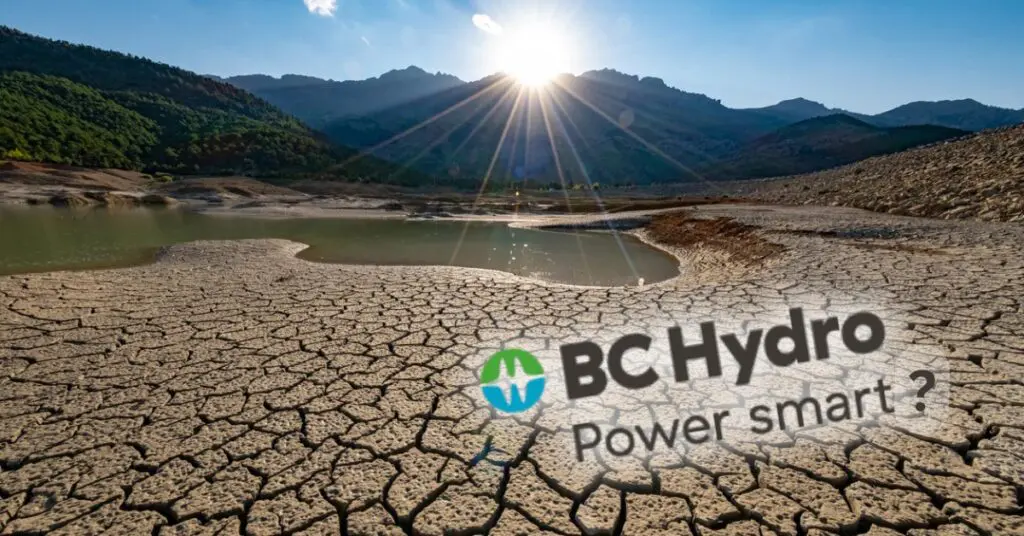
BC Hydro scrounges for electricity to feed LNG, AI industries
Your chance to comment on the utility’s half-baked plan to fulfill grandiose political promises
BC Hydro confirmed this week it is considering another hydroelectric dam on the Peace River (this one called “Site E”), as well as damming the Homathko River above Bute Inlet.
It’s part of a growing scramble for new electricity, as the public utility grapples with outsized promises our politicians have made to global LNG investors, and now, AI data centres.
British Columbians have a narrow window of time to fight off these parasitic industries, save our public energy grid and harness it to power a job-creating clean energy revolution.
The path our province ultimately takes could be determined by a hearing happening right now at the BC Utilities Commission (scroll down for instructions on how to participate).
Shortages loom in just four years
Voracious electricity demand from LNG terminals and data centres has BC Hydro rushing to upgrade existing dams, and plan new ones. But dams and transmission lines are just one part of an urgent push to boost the province’s available power.
In the last year and a half, BC Hydro has signed deals with a slew of private wind projects, most of which are majority-owned by First Nations.
The utility has announced it will spend a billion dollars on a new electricity conservation campaign, giving out programmable thermostats so households can save power for industry.
More controversially, BC Hydro is extending contracts with two large gas-fired power stations, negotiating to buy one of them, and rethinking restrictions on burning fossil fuels for power.
It’s also investing in “biomass” generation and geothermal energy, which are still at an experimental stage, and utility-scale batteries, which are proving hard to buy on short notice.
Why the panic? Because with Cedar LNG and Woodfibre LNG under construction, and Tilbury LNG, Ksi Lisims LNG and LNG Canada Phase 2 moving toward final investment decisions, BC Hydro has realized it could have a power shortage by 2030.
The bonkers plan to electrify LNG
There is only one large-scale LNG terminal in the world that runs on grid electricity. It’s in Texas, and has been plagued by problems since it opened, including an explosion and frequent power outages.
B.C. wants to electrify five LNG terminals, to produce what it claims is “clean” fuel. But this does nothing to reduce global climate impacts – and it risks breaking BC Hydro.
Conventional LNG plants, including the first phase of the LNG Canada terminal in Kitimat, burn their own gas for power. About 10 to 15 per cent of the methane coming through the pipeline is burned to power the giant freezers that turn the rest of the gas into a liquid.
Using a city’s worth of electricity instead would allow more of the gas coming through the pipeline to be liquified for export. So all that fuel would get burned overseas.
That shifts the emissions onto other countries’ books. But who pays for this accounting trick? BC Hydro ratepayers, who pay for the generation and transmission infrastructure.
Instead of selling surplus renewable energy at a premium to our neighbours, B.C.’s big idea is to sell that power at a loss to LNG companies – with B.C. families and businesses making up the difference on our bills.
The worst possible time
This is happening when the provincial grid is already under serious strain. B.C. just came out of a drought that reduced water levels in reservoirs, and forced us to become a net importer of electricity for three straight years.
Big mines and fracking operations want more access to electricity, to reduce their use of industrial diesel generators on remote project sites.
Then there’s the growing demand from households and companies switching to electric vehicles and heat pumps, which is key to decarbonizing our economy.
BC Hydro admitted during recent regulatory hearings that it doesn’t have enough electricity to meet the government’s legislated climate targets for 2040 or 2050.
All those problems are solvable. A capacity shortage in 15 years, we can plan for. But the limitless appetite of the LNG and AI industries is a different beast. This attempted takeover of our public renewable energy grid requires immediate action.
The breaking point
The government has already promised 400 megawatts of hydropower to AI data centres, which is more than a third of the capacity of Site C, now the John Horgan Dam.
British Columbians paid $16 billion for that dam, and flooded a fertile valley full of history. The idea of making that sacrifice, and then using the power to run computer programs that might take our jobs or harm our kids, is deeply upsetting to a lot of people.
A single large LNG terminal would gobble up the rest of the capacity of the Horgan dam. Five would require a complete rethink of the energy system that has served us for generations.
Fortunately, BC Hydro actually has to explain its solutions to the BC Utilities Commission, and get its long-term strategy approved by the regulator. That’s happening right now.
You can submit a comment to the BCUC until June 25, telling them what you think of the dog’s breakfast that BC Hydro has put before the regulator.
Have your say on the Integrated Resource Plan
Under “Proceeding Name” there’s a drop down menu that allows you to select “BC Hydro 2025 IRP”. If you’re not already registered as an intervener, select “No” on the question that follows.
Add your message in the Comments box, where you can type up to 1500 characters. If you want to make a longer comment, or add any supporting visuals, you can attach documents in a bunch of different formats.
The stakes are high. If LNG or AI investors realize the B.C. government has been exaggerating the amount of electricity available, jeopardizing future grid stability and stirring up public opposition, that’s just one more reason not to risk money on shaky proposals.
If these bubbles pop, B.C. will be left in a strong position, with a public grid and surplus power. Together with First Nations, we could build on this advantage, creating energy independence, lower costs for families and decades of good jobs in the clean energy economy.
It all comes down to whether the regulators are willing to accept BC Hydro’s half-baked plan to hijack our public grid for highly speculative LNG and AI projects. Submit your comment today.
APPENDIX: points to consider
BC Hydro is under enormous pressure from politicians to divert gigawatts of renewable energy to LNG terminals and AI data centres. Here are some points you may want to impress on the independent regulators reviewing the utility’s 20-year plan.
- If we’re going to have an LNG industry in B.C., it should stand on its own two feet. Any customer demanding hundreds of megawatts of grid power should pay for the new generation capacity, and new transmission lines, to supply their project. Putting this burden on other ratepayers creates an indirect subsidy to one industrial customer, paid for by the people in this province who can least afford it.
- If you ask 10 people in British Columbia if they want a data centre in their town, seven will say no. This issue is reaching a tipping point that should force a reconsideration of the government’s embrace of the AI industry. As B.C. has done with other industries (like cryptocurrency mining) we can decide to exclude AI from the public BC Hydro grid.
- If B.C. has surplus clean electricity we want to sell, there are customers willing to pay premium prices. They are our neighbours in states like California, which is home to the fourth largest economy in the world. Strengthening our regional grid, and our trade relationships with key democratic allies, is a far higher priority than subsidizing the assets of foreign state-owned companies or Wall Street private equity firms.
- Electrifying an LNG terminal does not make it “clean”. Downstream emissions may not be on British Columbia’s books, but they are by far the biggest portion of the pollution created by this product. Meanwhile, the theory that LNG would “displace” coal power in Asian economies has not come true. Instead, LNG is now competing directly with wind and solar systems. B.C.’s renewable electricity resource being used to delay the adoption of renewable energy in developing countries is a scenario we should avoid.
- Fossil gas will continue to be a useful resource, whether for making fertilizer, carbon fibre or other advanced materials. We should save it for processes that cannot be electrified, and occasional back-up power. Burning gas every day in power plants to generate electricity to send to an LNG terminal, in order to liquify gas to be burned overseas in power plants – that’s another scenario we should avoid.
